
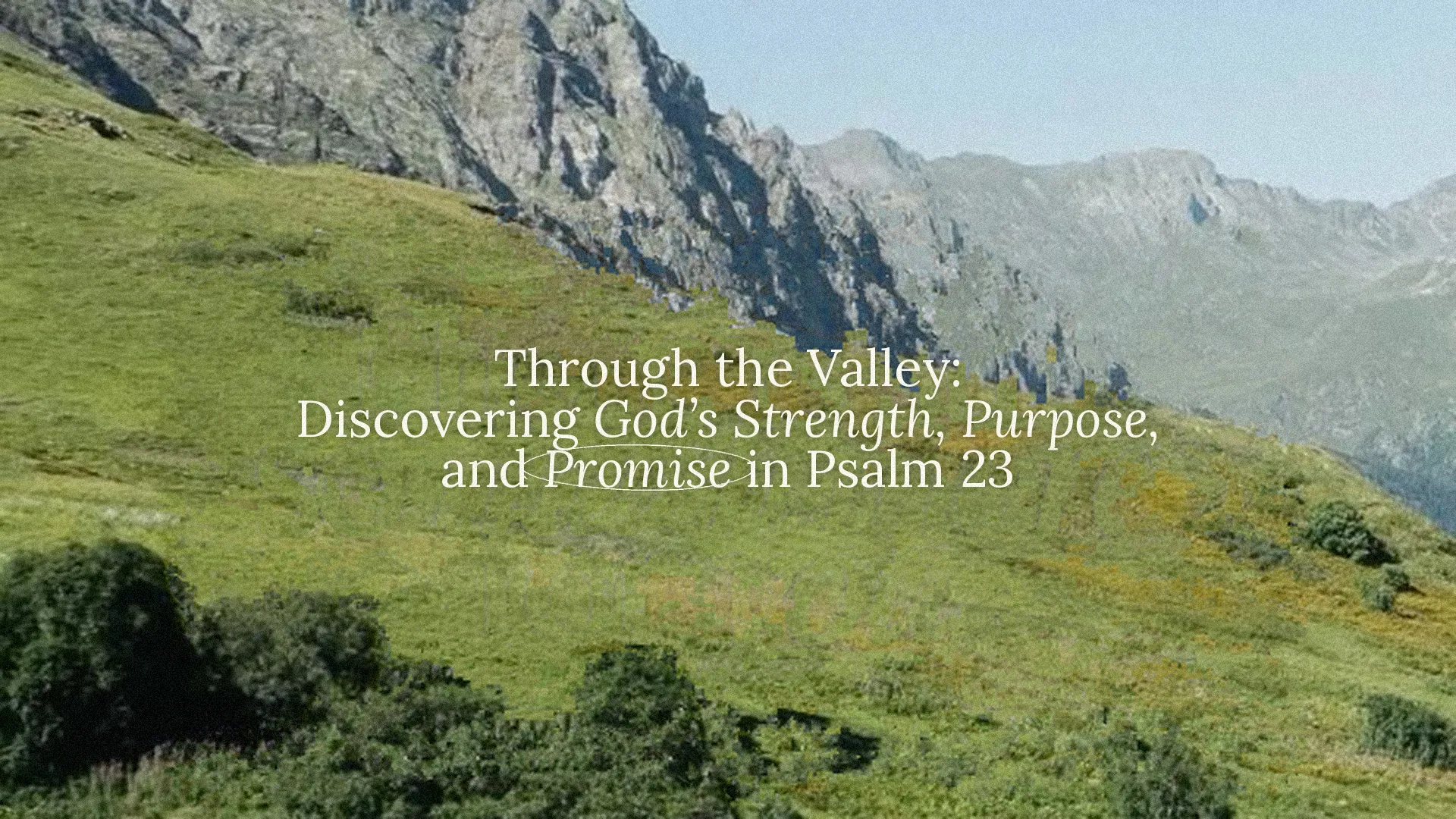
If you are walking through a difficult season right now, this is for you. The valley you are in is not a sign that God has forgotten you. Even here, He can strengthen you and prepare you for what lies ahead.
Psalm 23 is more than a comforting poem. It is a declaration of trust from David, a man who knew danger, hardship, and uncertainty—and who learned to praise God through it all.
Why Does God Allow Us to Go Through Hard Times?
One of the most important things to understand about trials is this: the battle does not mean you are being punished. God can use even the hardest seasons to prepare you for His purposes.
Before David wore a crown, he knew the wilderness. He hid from King Saul, faced danger, and experienced days when the future looked nothing like the promise God had given him. Although Scripture does not tell us exactly when David wrote Psalm 23, its words reflect the trust he developed through a lifetime of depending on God.
“The Lord is my shepherd; I shall not want.”
That is the testimony of someone who learned to trust the Shepherd even when he could not see the way ahead.
What Does “The Lord Is My Shepherd” Actually Mean?
David was not speaking philosophically. He was a real shepherd. He knew what it meant to tend sheep in difficult conditions. He had fought a lion and a bear to protect his father’s flock, with no audience and no applause.
When he wrote, “The Lord is my shepherd; I shall not want,” he was drawing on lived experience. He knew what a good shepherd does. A good shepherd does not abandon the sheep when danger comes. He stands guard over them.
That image matters. Jesus is the Good Shepherd who leads, protects, and never leaves His people.
Whatever you are facing today, you are not facing it without Him.
How Do We Respond to God in Difficult Seasons?
One powerful place to begin is with praise and thanksgiving.
We do not have to wait until the answer arrives to thank God for His faithfulness. We can praise Him while we are still praying, still waiting, and still learning to trust.
David’s life shows us what that looks like. In uncertainty and danger, he repeatedly turned his heart toward the Lord. His circumstances did not always change immediately, but he continued to bring his fears and needs to God.
That is what faith looks like: trusting God’s character when you cannot yet see the outcome.
Start your day in praise before you turn on the news or check your phone. Thank Him for His presence. Remember the ways He has carried you before. Let thanksgiving help you face today with renewed trust.
What Does Psalm 23 Say About Walking Through the Valley?
Let’s walk through the promises of this psalm.
- “He maketh me to lie down in green pastures.” God knows our need for provision and rest, even when the path around us looks barren.
- “He leadeth me beside the still waters.” Our Shepherd knows how to guide us toward refreshment and peace.
- “He restoreth my soul.” When we are weary, discouraged, or have wandered from His path, He calls us back and renews us.
- “He leadeth me in the paths of righteousness for his name’s sake.” He guides us toward lives that reflect His goodness, opening opportunities to do good and bless others.
- “Yea, though I walk through the valley of the shadow of death, I will fear no evil.” Our confidence rests in the presence of the Shepherd, even when the danger is real.
The valley is real. The fear may be real. But so is His presence.
Notice that David says he walks through the valley. Whatever this season holds, you can take the next step knowing your Shepherd is with you.
Why Did God Prepare Leaders Through Shepherding?
Moses and David both spent years tending flocks before leading God’s people. Amos also came from a life of tending sheep.
Shepherding required patience, attentiveness, courage, and care. Much of that work happened far from public recognition.
God still develops character in quiet places. The responsibility nobody notices, the faithful decision nobody applauds, and the difficult season you never would have chosen can become places of growth.
David’s years in the wilderness were not wasted years. They helped prepare him for responsibilities he had not yet received.
Your faithfulness in this season matters, too.
What If the Answer Is Taking Too Long?
Abraham waited many years for the birth of Isaac. David also waited years between being anointed and becoming king.
Both had to trust God while living in the space between a promise and its fulfillment.
Waiting can be painful. But a delay does not mean God has forgotten you.
Too often, we pitch a tent in the valley. We become so discouraged by what has not happened that we stop taking the steps God has placed before us.
Keep praying. Keep growing. Keep doing the good you know to do. Bring your disappointment honestly to the Lord, and allow Him to strengthen you for today.
The God who spoke hope to His people in exile remains faithful to His purposes:
“For I know the plans I have for you, declares the Lord, plans to prosper you and not to harm you, plans to give you hope and a future.” —Jeremiah 29:11
Your circumstances do not place you beyond His care.
What Is Your Mission and Why Does It Matter?
Scripture expresses a beautiful desire for our well-being:
“Beloved, I wish above all things that thou mayest prosper and be in health, even as thy soul prospers” —3 John 1:2
God cares about your whole life. He also calls you to live with purpose—to love Him, serve others, and carry His light into the world.
A difficult season can consume so much of our attention that we lose sight of the opportunities still around us. Yet even while we need encouragement, we may have encouragement to offer someone else.
Your mission reaches into your everyday life: your home, your workplace, your relationships, and the people God places in your path.
Bring the love of Jesus wherever you go. Pray for someone who is hurting. Offer kindness. Meet a need when you can. Let your life reflect the Shepherd who cares for you.
What Happens as God Leads You Through the Valley?
In Hinds’ Feet on High Places, the journey toward the heights unfolds through struggle, trust, and growing dependence on the Shepherd.
That picture reminds us that spiritual growth often happens one difficult step at a time. Strength develops as we keep walking with Him.
And the comfort we receive can become comfort we share.
Someone else may need the reassurance you once needed. Someone else may be facing a fear you understand. Your experience can help you listen with compassion, pray with understanding, and remind another person that they are not alone.
“And we know that all things work together for good to them that love God, to them who are the called according to his purpose.” —Romans 8:28
God can bring good even from painful circumstances. As He strengthens you, look for opportunities to strengthen someone else.
You Are Not Alone in the Valley
Our confidence rests in God’s faithfulness and in what Jesus has done for us.
When fear comes against you, lift your hands in praise and remember who holds your life. You belong to the Good Shepherd. His love does not disappear when the road becomes difficult.
“If God be for us, who can be against us?” —Romans 8:31
You may not have every answer today. You may still be waiting for a door to open or a burden to lift. But you can bring every concern to the One who knows you and loves you.
He has not abandoned you.
Trusting the Shepherd Day by Day
Psalm 23 teaches us that trusting God grows from knowing His character. David describes a Shepherd who provides, restores, guides, and remains close through danger. Each picture helps us understand a different aspect of God’s care.
The green pastures and still waters reveal our need for nourishment and rest. The restoration of the soul reminds us that God cares about our inner lives as well as our outward circumstances. His paths of righteousness show that His guidance shapes how we live and how we treat others.
In the valley, David’s language becomes especially personal. He moves from speaking about God—“He leadeth me”—to speaking directly to Him: “Thou art with me.” The emphasis shifts from the path ahead to the presence of the Shepherd beside him.
This is an encouraging lesson for our own difficult seasons. We may not understand every circumstance, but we can continue to know God through prayer, Scripture, praise, and thanksgiving. These practices help us remember His faithfulness while we wait for answers.
His care also teaches us how to care for others. As we receive comfort, we become more attentive to those who need encouragement, protection, and practical help. Trust in the Shepherd finds expression in compassion for the people He places within our reach.
Your Generosity Helps Repair a Broken World
That compassion is something you help put into action through your partnership with Larry Huch Ministries.
Through your faithful support, you have made it possible for us to share the biblical message of standing with Israel and blessing the Jewish people through television programs seen around the world. Because you give, this message reaches people we might otherwise never reach.
Your compassion also extends beyond the television screen. Through our ongoing relationship with Keren Hayesod, you help support humanitarian outreach that brings practical care and hope to people in Israel.
In Jewish tradition, tikkun olam means “repairing the world.” Your generosity helps put that principle into action—meeting needs, restoring hope, and showing people they have not been forgotten.
Thank you for letting your light shine in Israel. Your kindness reflects the love of God, and we are deeply grateful for the difference you continue to make.
Today, your gift can carry that impact forward. Your support will strengthen Project Aliyah, helping Jewish families come home to Israel; help combat antisemitism through our partnership with the Israel Allies Foundation; and sustain Christian television broadcasts that teach the importance of standing with Israel.
Each outreach depends on the generosity of friends like you.
The Hebrew word tzedakah connects charitable giving with righteousness. Through acts of kindness, goodness, and generosity, you make your faith visible and become a blessing to others.
God’s promise to Abraham, “I will bless those who bless you,” continues to inspire our commitment to Israel and the Jewish people. Thank you for sharing that commitment so faithfully.
Will you prayerfully sow your most generous tzedakah offering today? Your gift will help bring families home, stand against hatred, and carry the biblical message of support for Israel into homes around the world.
Your Best Is Yet To Come
Larry Huch Ministries
